Selling a car safely starts before the first message
Most people who sell a car privately never run into trouble. But private vehicle sales attract fraud for a simple reason: they involve a valuable item, a stranger, and a payment, often all on the same afternoon. Knowing the handful of patterns that keep repeating is usually enough to avoid every one of them.
This guide covers the scams that actually show up in Massachusetts, New Hampshire, and Rhode Island, how to take payment safely, and the paperwork that protects you after the car has left your driveway.
The scams worth knowing
The overpayment. A buyer sends a check for more than the agreed figure, then asks you to refund the difference or forward it to a shipper. The check clears on paper, you send the money, and days later the check is reversed. Your bank will hold you responsible for the full amount.
The counterfeit cashier check. Modern forgeries are convincing, and a teller accepting a check is not the same as the funds being final. Verify any bank instrument directly with the issuing bank using a phone number you looked up yourself, never the number printed on the check.
The remote buyer with a shipping agent. Someone who cannot come to see the car, wants to arrange transport, and pushes to pay before viewing is almost always a fraud pattern. Genuine buyers look at the car.
The fake escrow service. A buyer proposes a third-party escrow site you have never heard of. The site is theirs. Money placed there does not come back.
The test drive that does not end. Never hand over keys without seeing a license, photographing it, and going along for the drive.
The information harvest. Some contacts are not buyers at all. They want the VIN, your address, your license, or a copy of the title in order to build a fraudulent listing or a synthetic identity. Share the VIN openly if you like, since a history report is a fair request, but nothing else until a sale is genuinely happening.
Taking payment without exposure
Payment is where the actual risk sits. A few principles cover most of it:
- Do not release the vehicle or sign over the title until funds are confirmed final, not merely deposited.
- Treat personal checks as unsecured. They can be reversed long after they appear to clear.
- Be cautious with peer-to-peer payment apps for large amounts. Many offer no protection for private sales and some reverse transfers after the fact.
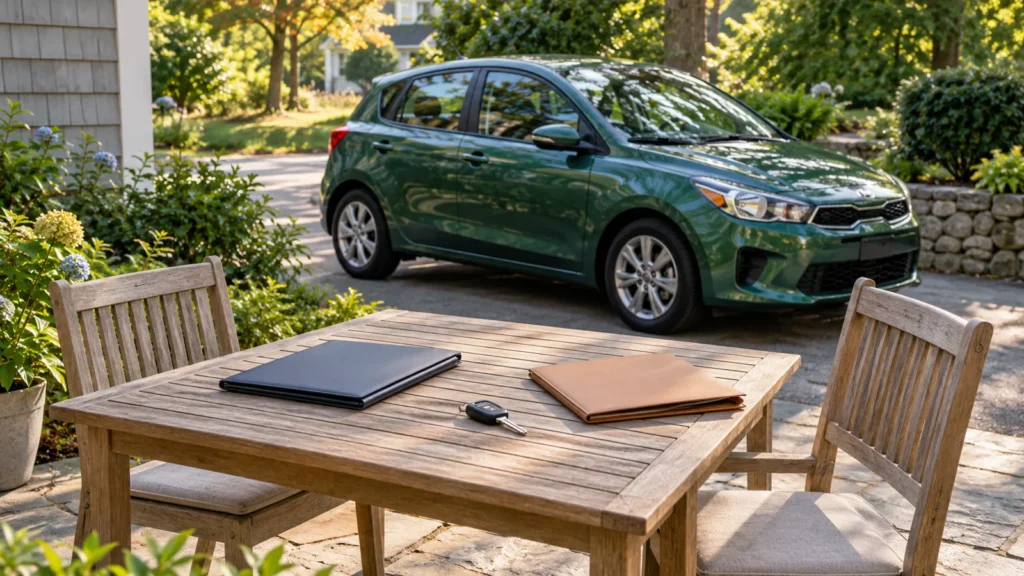
- If you are meeting a private buyer, completing the transaction inside their bank during business hours is one of the safest arrangements available, because the funds can be verified on the spot.
When we buy a car, payment is made by business check or certified bank check at handover, and the written offer is agreed before we arrive. That removes the negotiation-in-the-driveway dynamic that a lot of private sales fall into.
Meeting a stranger sensibly
If you do sell privately, meet in daylight in a public place with cameras, such as a bank parking lot or a police station lot. Many departments in the region now designate a spot for exactly this. Bring someone with you. Tell another person where you are going and when you expect to be back. Remove the garage remote, any documents with your address, and anything valuable from the car before anyone sits in it. Before handover, also use our car data removal checklist to review saved contacts, navigation, and linked accounts, following the FTC vehicle privacy guidance.
Before a test drive, check for safety restrictions as well as payment risks. Our guide to selling a car with an open recall explains how to check the VIN and follow the manufacturer’s instructions before arranging a buyer visit.
The paperwork that protects you afterward
A surprising share of post-sale problems are not fraud at all. They are loose ends. Protect yourself by doing all of the following:
- Complete a bill of sale with the date, the price, the odometer reading, the vehicle identification number, and both signatures. Keep a copy.
- Sign the title over correctly. The detail on this varies by state, and we set out the Massachusetts process in transferring a car title in Massachusetts.
- Remove your plates before the car leaves. Plates belong to you, not to the vehicle.
- Cancel the registration and the insurance once the sale is done, and keep the confirmation.
That last group of steps is where most people slip up, and it is the difference between a clean break and being contacted months later about a car you no longer own.
When an established buyer simplifies the sale
If you prefer a direct buyer, review our online enquiry and local inspection process. Confirm the business identity, written terms and payment arrangements whichever route you choose.
Selling to an established buyer can reduce the work of creating listings and arranging private viewings. It does not remove every risk. Verify the business, review the written offer and confirm payment arrangements before handing over the car.
Which route makes sense depends on your appetite for the process. If you want to weigh it properly, how to sell a car privately lays out what a private sale genuinely involves, and you can always get a written offer first as a benchmark before deciding.
Frequently asked questions
What is the safest way to accept payment for a car?
Verified funds, confirmed final before you release the vehicle. Completing the sale inside the bank of the buyer during business hours lets the bank confirm the instrument in front of you.
Should I give out the VIN?
Yes, that is a normal request so a buyer can run a history report. Your license, address, and title should stay private until a sale is actually proceeding.
Is a bill of sale required in Massachusetts?
It is strongly advisable regardless of whether it is demanded, because it documents the odometer reading, the date, and the transfer. Keep your copy. More detail is in the paperwork guide.
What if the buyer wants to pay in installments?
Decline. Ownership transfers once, and partial payment leaves you holding the risk with no leverage.
Paper protects you as much as caution does. A written bill of sale with a disclosure line, plus knowing the as-is rules in Massachusetts, closes the two loopholes an unhappy buyer most often tries to reopen.
Paperwork fraud is quieter than payment fraud and just as costly. A buyer who asks you to leave the mileage blank, or to write a number you have not checked yourself, is asking you to sign a false odometer disclosure. That is a federal offense, and it carries your signature, not theirs.
Where We Buy Cars
We buy cars across Greater Boston, MetroWest, the North Shore, the South Shore, Cape Cod, Seacoast New Hampshire, Rhode Island.
Popular towns: Newton, Somerville, Cambridge, Worcester, Providence, Manchester, Brookline, Waltham.
Selling a specific make? See the brands we buy: BMW, Mercedes-Benz, Porsche, Toyota, Honda, Jeep, Tesla, Lexus and more.